Want a Downtown St. Pete condo you can enjoy without turning every trip into a property management project? If you plan to use a condo only part of the year, the best purchase is usually not the one with the flashiest finishes or highest-floor view. It is the one with clear rules, manageable costs, and a building that is easy to lock, leave, and trust. Let’s dive in.
Start With the Building
When you buy a condo for occasional use, the building matters just as much as the unit. You are not only buying interior space. You are also buying into an association, its budget, its maintenance practices, its insurance setup, and its rules.
In Downtown St. Petersburg, that matters even more because many condo buildings are subject to Florida’s structural and reserve requirements. For residential condominium buildings that are three habitable stories or more, Florida’s milestone inspection law requires inspections by 30 years of age, with earlier timing allowed in some local coastal or salt-water situations. Separate Florida condo reserve law also requires a structural integrity reserve study every 10 years for qualifying residential buildings.
For you as a part-time owner, that means the smartest first question is often not “How nice is the kitchen?” It is “How well is this building run?” A great unit in a poorly prepared building can create more stress and cost than you expected.
Why Lock-and-Leave Matters
A downtown condo can be a strong fit for occasional use because it can reduce the upkeep that comes with a detached home. But not every condo creates the same low-maintenance experience. The right fit is usually one where everyday ownership feels simple, predictable, and secure.
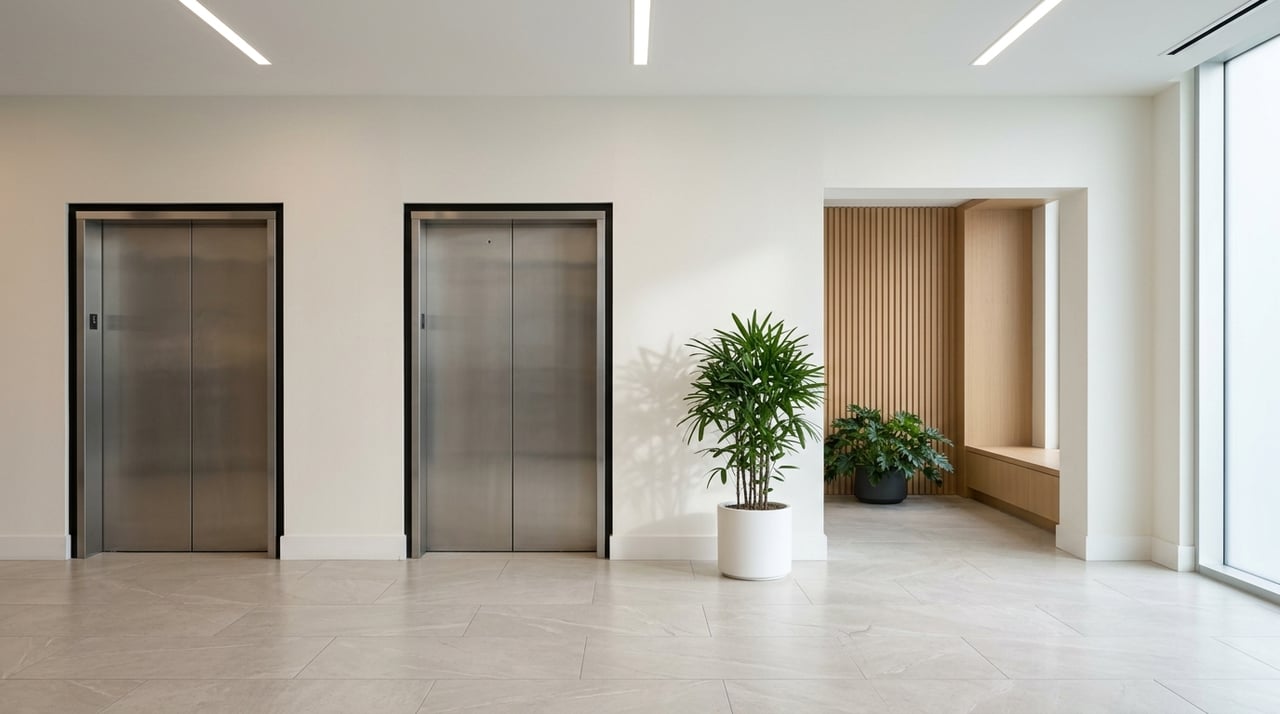
That includes practical details like secure entry, dependable elevators, guest parking, package handling, and storage that does not become a hassle every time you arrive or leave. These are not luxury extras for a part-time owner. They are quality-of-life features that reduce friction.
Review Parking and Storage Carefully
Parking and storage can look simple during a showing, but they are legal and financial details you should confirm in the condo documents. Under Florida law, a condominium unit carries appurtenances described in the declaration, including exclusive rights to use portions of the common elements when the declaration provides for them.
In plain terms, that means a parking space or storage locker may be deeded, assigned, or treated as a limited common element depending on the building documents. You do not want to assume a spot or locker automatically transfers with the unit just because the listing mentions it.
Before you buy, ask questions like these:
- Is the parking space deeded, assigned, or just permitted use?
- Does the storage area transfer with the unit?
- Is the storage considered a limited common element?
- Are there guest parking rules or restrictions?
These details matter when you use the condo only occasionally. Clear parking and storage rights make arrival easier now and can also support resale later.
Understand Who Maintains What
If you will not be in the condo full-time, maintenance responsibility becomes a major issue. Florida law generally makes the association responsible for common-element maintenance, repair, and replacement, except where the declaration assigns responsibility for limited common elements to the unit owner.
That is why you should not stop at “the HOA handles maintenance.” You need to know exactly what that means in that specific building. Some items may fall to the association, while others tied to limited common elements may fall to you.
This is one area where a practical review can save you headaches. A condo that is truly easy to own part-time usually has clearly defined responsibilities and a building culture that keeps maintenance from becoming confusing.
Check Insurance Before You Commit
Insurance deserves close attention in any Florida condo purchase, and especially in a coastal downtown location. Florida law requires associations to maintain adequate property insurance, allows associations to carry flood insurance for common elements, association property, and units, and makes the unit owner responsible for personal property and many interior items excluded from the association policy.
That means you should review coverage at both levels: the building’s master policy and your future unit-owner policy. You want to know what the association covers and what you will need to insure yourself.
Flood insurance should get its own conversation. Florida’s insurance regulator says flood insurance is available for condo unit owners, and condo associations may also obtain flood insurance for common elements, association property, and units. In a Downtown St. Pete condo search, that is not a box to check quickly. It is part of understanding your true carrying costs.
Read the Association Documents
For occasional-use buyers, the condo documents often tell the real story. Florida law requires associations to keep official records, including the declaration, bylaws, current rules, plans, permits, warranties, and related records. These records are open to inspection by members and their authorized representatives at reasonable times.
Those records can help you confirm whether the building matches your goals. If you want a condo that works as a second home, you need more than a nice showing experience. You need building rules that make your ownership plan workable.
Focus on these building-specific questions:
- What are the minimum lease periods?
- Are short-term rentals allowed?
- Are there rental approval rules?
- What are the pet rules?
- What are the guest rules?
- Are there occupancy limits?
- What are the parking and storage rules?
These answers usually come from the declaration, bylaws, rules, and amendments, not from a general city-wide standard. Every building can be different.
Ask for Reserve and Inspection Records
In Florida condos, reserve funding and structural compliance are not side topics. They are core ownership issues. If the building is subject to a milestone inspection or a structural integrity reserve study, ask for the inspector-prepared milestone summary and the most recent reserve study.
Florida law requires the association to distribute the milestone summary to unit owners. For structural integrity reserve studies, the association must distribute the study or a notice that it is available.
This matters because structural reserve funding is now a major cost driver for many condo owners. The reserve study must cover items such as the roof, structure, fireproofing, plumbing, electrical, waterproofing and exterior painting, windows and exterior doors, plus other large deferred-maintenance items above the statutory threshold. For associations that must obtain a structural integrity reserve study, budgets cannot simply waive or underfund those required reserve items after December 31, 2024.
In simple terms, if the building has upcoming repair needs or underfunded reserves, your monthly costs or special assessment exposure may look very different than they did at first glance.
Budget for More Than the List Price
An occasional-use condo should feel financially predictable. To get there, you need to understand all the carrying costs, not just the purchase price and monthly dues.
Florida law says ad valorem taxes and special assessments are assessed against each condominium parcel, and a unit owner is liable for assessments that come due while they own the unit. That means your ownership costs can include property taxes, regular association assessments, insurance, and any approved special assessments.
If a phase-two milestone inspection identifies substantial structural deterioration, the law contemplates repair timelines and can trigger significant repair obligations that the association must manage and fund. For a buyer, that is a reminder to ask whether any special assessments are pending or recently approved and whether any major repairs are planned.
Do Not Assume Homestead Status
If you are buying the condo for occasional use rather than as your primary residence, do not assume it will be treated as homestead property. Pinellas County says the property must be your primary residence as of January 1 to qualify for homestead.
Pinellas County also explains that property without homestead is subject to a 10% annual cap on assessed-value increases rather than the homestead and Save Our Homes framework. For a second-home buyer, that is an important part of tax planning.
If your long-term plan could change, ask how your intended occupancy lines up with the property appraiser’s rules. For a part-time condo, clarity here helps you avoid surprises later.
What Supports Resale Later
If you may sell the condo in the future, resale value is not only about finishes and views. In Downtown St. Pete, one of the strongest resale signals is how cleanly the building operates on paper.
Buyers tend to respond well to condos with understandable rules, clear parking and storage rights, adequate insurance, and reserve funding that does not rely on surprise special assessments. Those details help the next buyer feel the same thing you want to feel now: confidence.
That is why a smart occasional-use condo purchase is really about reducing friction. When the building has clear records, clear responsibilities, and clear financial obligations, ownership tends to feel simpler.
A Smart Touring Checklist
When you tour Downtown St. Pete condos for occasional use, keep your questions practical and specific:
- Ask whether the parking space is deeded, assigned, or permitted use only.
- Ask whether storage is included and whether it transfers with the unit.
- Ask for the declaration, bylaws, rules, amendments, current budget, year-end financials, latest reserve study, and any milestone-inspection summary.
- Ask about minimum lease periods, rental approval rules, pet rules, guest rules, and occupancy limits.
- Ask what the master policy covers and what the unit owner must insure.
- Ask whether the building carries flood coverage.
- Ask whether any special assessments are pending or recently approved.
- Ask whether milestone inspections have been completed and whether any reserve-related repairs are planned.
- Ask about homestead eligibility only if you plan to live there full-time.
A practical condo search usually leads to better decisions than an emotional one. When you focus on the building first, you give yourself a better chance of buying a place that fits how you will actually use it.
If you want help comparing Downtown St. Pete condo options with a practical eye on costs, condition, and long-term fit, Derek Mcdonald can help you sort through the details and find a condo that works for the way you plan to live.
FAQs
What should you review before buying a Downtown St. Pete condo for occasional use?
- Review the declaration, bylaws, rules, amendments, current budget, year-end financials, latest reserve study, milestone-inspection summary if applicable, insurance details, and any pending special assessments.
Why do condo reserves matter in a Downtown St. Pete purchase?
- Reserve funding affects your long-term costs because qualifying Florida condo associations must fund key structural and deferred-maintenance items through required reserve budgeting.
Can a Downtown St. Pete second-home condo qualify for homestead?
- Pinellas County says homestead requires the property to be your primary residence as of January 1, so an occasional-use condo generally should not be assumed to qualify.
What should you ask about parking in a Downtown St. Pete condo building?
- Ask whether the parking space is deeded, assigned, or only a permitted use right, and confirm how that right is described in the condo documents.
Why is flood insurance important for a Downtown St. Pete condo?
- In a coastal downtown market, flood insurance affects risk and ownership costs because coverage may exist at the association level, the unit-owner level, or both depending on the building and policy setup.